Background
The problem
Patients who are actively engaged in their care—defined as having the knowledge, skills, and willingness to manage their own health—have a 21% lower cost of care. Many patients don’t understand their treatment plan, which leads to intentional or unintentional non-adherence.
Health inequities among people of different races and ethnicities, geographical locations, and social classes are growing and directly affecting health through the distribution of resources, risk, and power. Health systems try to engage patients through their existing patient portals, but typically see less than 25% adoption.
Our approach
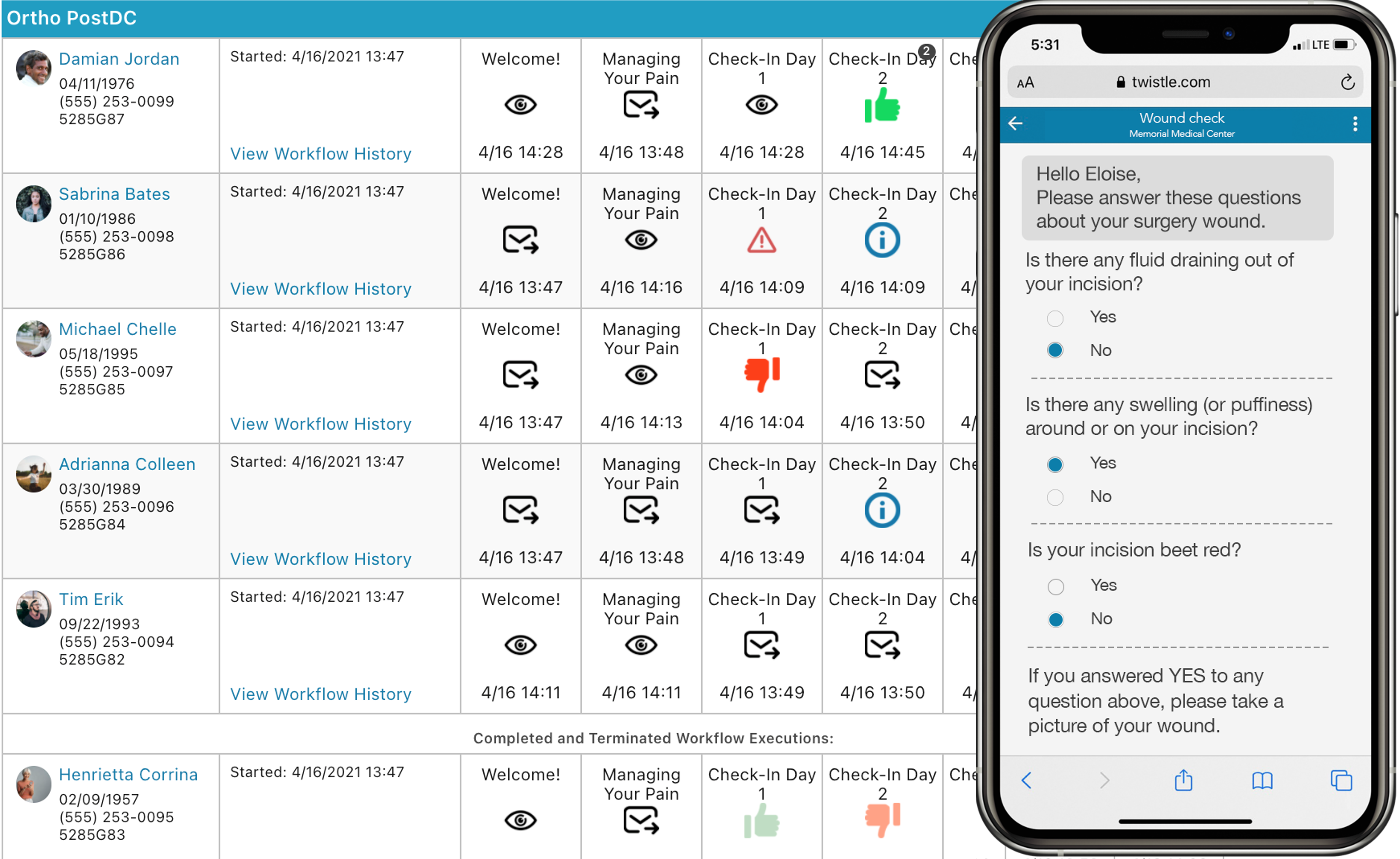
The Twistle Patient Engagement by Health Catalyst™ application delivers personalized, step-by-step guidance to the patient’s mobile phone to keep them on track with their medical plan of care. It uses secure, patient-centric communication to deliver personalized, step-by-step guidance to the patient’s mobile phone to drive care plan and protocol adherence, which improves outcomes, lowers costs, and generates clinical, financial, and operational value:
- 90%+ patient engagement rates
- 20% improvement in medication/device adherence
- 32% fewer readmissions
Benefits and features
- Reach every patient and reduce health inequities with a "patients first" approach. Send messages to patient cell phones via SMS text—the easiest, most convenient way to reach patients; other options include email, EMR portals, and interactive voice response.
- Increase efficiency of care teams. Proactively address common questions and reduce inbound patient calls—and alert care team members when patients need additional help.
- Provide flexible tech and seamless integration. Automate and personalize patient messages with EHR and device integrations to automatically message patients who meet certain criteria.
- Increase usability through AI. Twistle learns from user behavior and existing data sets to more accurately predict and deliver the best possible tailored outcome.
Featured outcomes
Remote Monitoring and Digital Patient Engagement Improves Blood Pressure Control
- 22 percentage point increase in the number of patients with blood pressure control.
- 80 percent of patients achieved an average SBP/DBP of <140/90. After one 14-day or 28-day Controlling Blood Pressure Pathway cycle.
- 36 percent of patients achieved an average SBP/DBP of <130/80. After one 14-day or 28-day Controlling Blood Pressure Pathway cycle.
- $7K ROI per provider per year.
Digital Patient Engagement Technology Addresses Gap for Pediatric Patients and Caregivers
- Hundreds of parents and guardians provided support through the NICU admission pathway.
- 91.2 percent of caregivers reviewed NICU admission content, including logistics, consent for treatment, and education.
- The discharge pathway is initiated well before discharge, providing parents, guardians, and caregivers adequate time to learn and prepare for safe discharge.